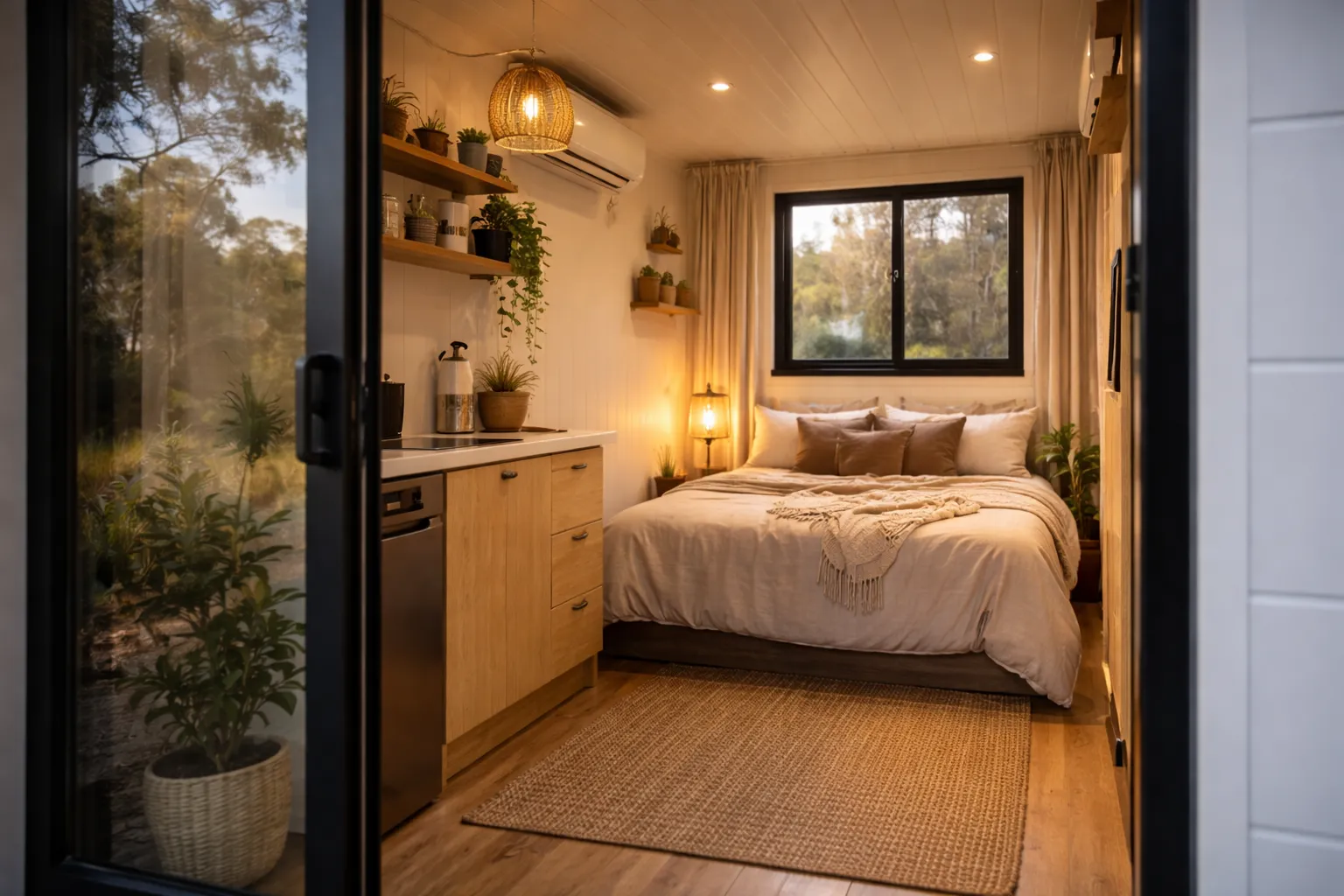
Strong Return on Investment
With nightly rates often ranging from $120 to $250 and build costs between $80,000 and $160,000, well-located tiny homes can achieve payback periods of three to five years.
Low Entry Cost
Compared to purchasing an investment property, a tiny home requires far less capital. This makes short-stay investment accessible to a broader range of investors.
Dual Income Potential
If you already own rural or semi-rural land, adding a tiny home creates a second income stream without a second mortgage.
Growing Guest Demand
Unique stays and nature-based accommodation are among the fastest-growing segments on Airbnb and Stayz. Tiny homes consistently attract high occupancy and strong reviews.
Relocatable Asset
A tiny home on wheels can be moved to a different site if your circumstances change or if you identify a higher-performing location.
Why Tiny Homes Make Sense for Short-Stay Investment
The short-stay accommodation market in Australia has matured significantly. Guests are no longer simply looking for a cheap alternative to hotels — they want memorable, design-led experiences in interesting locations. Tiny homes sit squarely in this sweet spot. A well-designed tiny home on a scenic property can command premium nightly rates while costing a fraction of a traditional holiday rental to build and maintain.
Understanding the Returns
The economics of a tiny home short-stay investment are straightforward. Consider a typical scenario:
- Build cost: $120,000 for a fully fitted, high-quality tiny home
- Average nightly rate: $180
- Occupancy rate: 65% (237 nights per year)
- Gross annual income: approximately $42,600
- Operating costs: platform fees (3–15%), cleaning, consumables, insurance and maintenance — typically 30–40% of gross income
- Net annual income: approximately $25,000 to $30,000
At these numbers, the build cost is recovered in four to five years. Properties in high-demand tourist areas — coastal towns, wine regions, hinterland retreats — often perform better. Of course, actual returns depend on location, seasonality, pricing strategy and how well you manage the listing.
Council Rules and Compliance
This is the area where many investors come unstuck. Short-stay accommodation is regulated at the local council level, and rules vary significantly across Australia.
Key considerations include:
- Development approval — some councils require a development application (DA) for short-stay accommodation, even on land where a dwelling is otherwise permitted
- Days-per-year caps — New South Wales, for example, limits non-hosted short-stay accommodation to 180 days per year in Greater Sydney (no cap in regional areas, though individual councils may impose their own)
- Planning zone restrictions — not all zones permit tourist or visitor accommodation as a land use
- Building standards — a tiny home used for guest accommodation typically needs to comply with the Building Code of Australia, regardless of whether it is on wheels or a fixed foundation
- Bushfire and flood overlays — properties in designated hazard areas face additional requirements
Engage with your local council early. A pre-lodgement meeting can save considerable time and money. Check your state’s regulation guide for the specific rules that apply.
Designing for Guests
A tiny home designed for short-stay guests has different priorities to one designed as a permanent residence. Features that drive strong reviews and repeat bookings include:
- A comfortable queen or king bed — not a loft accessed by a ladder
- A well-appointed bathroom with good water pressure and hot water reliability
- Air conditioning and heating appropriate to the climate
- Outdoor living space — a deck, verandah or fire pit area that extends the usable space
- Thoughtful styling and finishes — guests book tiny homes for the experience, so design matters
- Strong Wi-Fi — essential for both leisure and remote-working guests
Discuss your intended use with your builder from the outset. Experienced builders understand the difference between a home for living and a home for hosting, and can advise on layouts, materials and fixtures that perform well in a rental context.
Platform Tips
Most tiny home hosts list on Airbnb, Stayz (part of the Expedia group) or both. A few practical considerations:
- Professional photography is non-negotiable — it is the single biggest driver of booking conversions
- Pricing tools like PriceLabs or Beyond Pricing can help you optimise rates based on demand, seasonality and local events
- Automated messaging and self-check-in reduce your management workload significantly
- Superhost or Premier Host status improves your visibility on platforms and builds trust with potential guests
Insurance
Standard home and contents insurance does not cover short-stay rental use. You will need a specialist policy — companies like NRMA, Terri Scheer and Share & Protect offer products designed for short-stay hosts. Airbnb provides its own AirCover programme, but most experienced hosts recommend carrying independent cover as well.
Getting Started
If you have suitable land and are considering a tiny home for short-stay income, begin with a feasibility check: research your council’s rules, assess demand in your area (review comparable listings on Airbnb and Stayz), and run the numbers on build cost versus projected income. If you are still searching for the right property, our buying land guide covers zoning, access and due diligence for tiny home sites. From there, connect with a builder who has experience delivering homes for the short-stay market.
Find Builders for Investment Tiny Homes
Find Builders