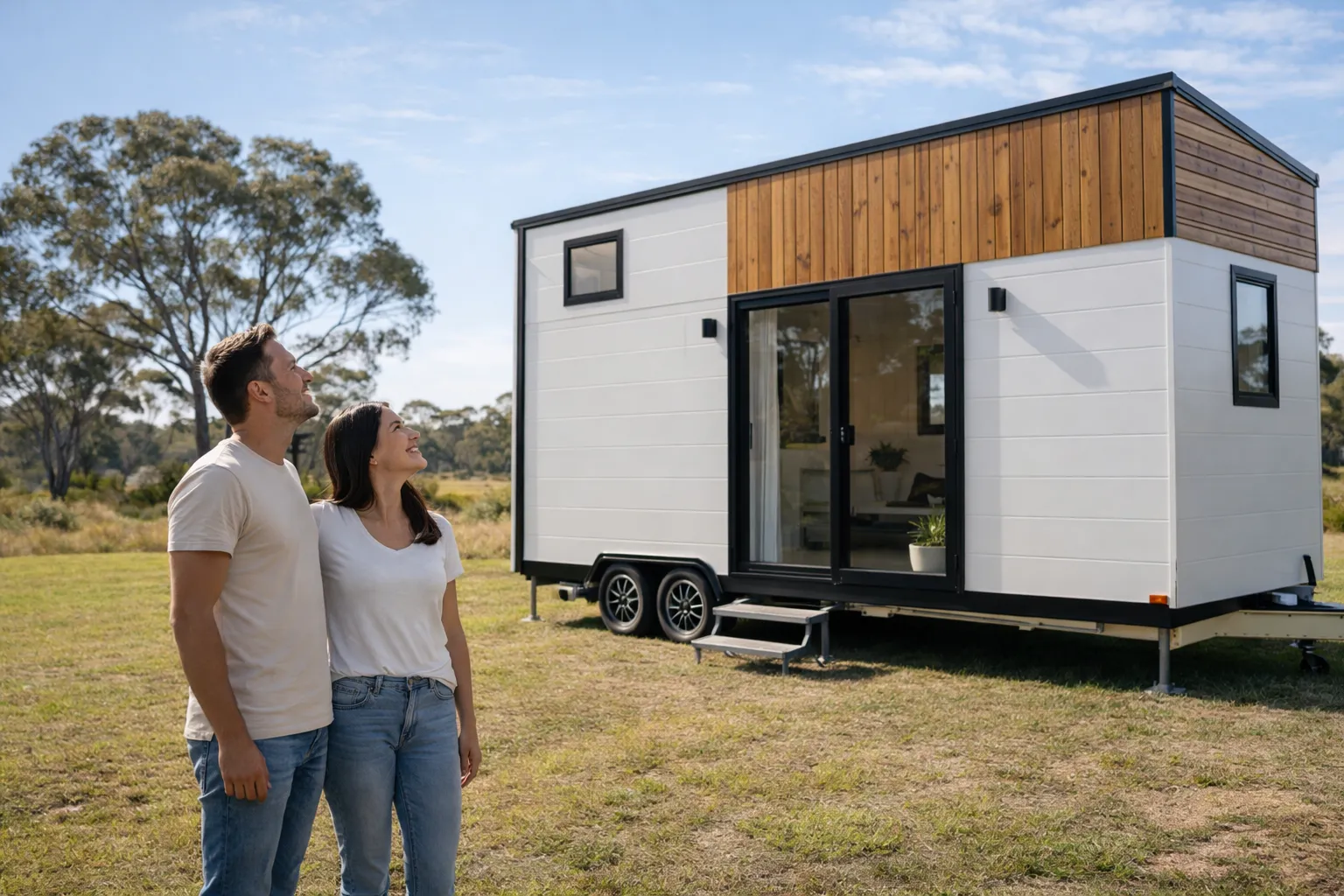
Genuinely Affordable
A quality tiny home typically costs between $80,000 and $160,000 — a fraction of the median Australian house price. This means a smaller mortgage, lower repayments and less financial stress.
Low Deposit Required
With a lower total purchase price, the deposit you need is far more achievable. Many first-home buyers can reach their savings goal years earlier than with a traditional home.
Owner-Builder Pathway
Flat-pack and kit home options let you reduce costs further by contributing your own labour. Some suppliers provide full plans, engineering and support for owner-builders.
Flexibility to Move or Upgrade
A tiny home on wheels or a relocatable design gives you the freedom to move if your circumstances change — whether that is a new job, a growing family or a tree change.
A Stepping Stone to Your Next Home
A tiny home can serve as your primary residence while you save for a larger property. Some buyers later convert theirs into a rental, guest house or home office.
Why First-Home Buyers Are Turning to Tiny Homes
The Great Australian Dream of home ownership is increasingly out of reach for many young people. With median house prices exceeding $900,000 in most capital cities, saving a 20% deposit can take a decade or more. Tiny homes offer a practical alternative — not as a compromise, but as a deliberate choice to prioritise ownership, financial freedom and flexibility over square metres.
How the Numbers Stack Up
A well-built tiny home from an Australian manufacturer typically costs between $80,000 and $160,000, depending on size, specifications and whether it is on wheels or a fixed foundation. Compare that to the national median house price, and the difference is stark.
A smaller purchase price means:
- A deposit you can actually save — $16,000 to $32,000 at 20%, rather than $180,000 or more for a median-priced house
- Lower mortgage repayments — potentially $400 to $700 per month rather than $3,000 or more
- Less interest paid over the life of the loan — often saving hundreds of thousands of dollars
- Greater financial resilience — if interest rates rise or your income changes, smaller repayments are easier to manage
Financing Your Tiny Home
Financing a tiny home works differently depending on the type. A tiny home on a permanent foundation on your own land can generally be financed through a standard home loan or construction loan. Tiny homes on wheels are typically classified as caravans or chattels, which means personal loans or chattel mortgages may apply — these usually carry higher interest rates.
Some options to explore:
- First Home Owner Grant (FHOG) — available in most states for new builds, though eligibility criteria vary and the home usually needs to be on a fixed foundation
- First Home Guarantee — the federal government’s scheme allowing eligible buyers to purchase with as little as a 5% deposit without paying lenders mortgage insurance
- State stamp duty concessions — most states offer reduced or waived stamp duty for first-home buyers under certain price thresholds, which tiny homes often fall comfortably within
Check your state or territory’s revenue office website for current thresholds and eligibility rules, as these change regularly.
The Owner-Builder Path
For those willing to get their hands dirty, flat-pack and kit tiny homes can significantly reduce costs. Some Australian builders provide pre-engineered kits with full plans, materials lists and building guides. You will still need to engage licensed tradespeople for electrical, plumbing and gas work, but handling the general construction yourself can save 30% to 40% on the finished cost.
If you go this route, you will need an owner-builder permit in most states. Requirements vary — in Victoria, for example, you must complete a registered owner-builder course for projects over $16,000. In New South Wales, the threshold is $10,000.
Land Options
You do not necessarily need to buy land outright. Options include:
- Leasing land in a caravan park or tiny home community
- Placing your home on a family member’s property as a secondary dwelling (subject to council approval)
- Purchasing a small rural or semi-rural block, which can be significantly cheaper than suburban land
- Shared land arrangements with other tiny home owners
Each option has different planning and regulatory implications — check your state’s regulation guide early in the process.
Getting Started
If you are considering a tiny home as your first home, start by getting clear on your budget, preferred location and whether you want a fixed or relocatable design. Visit display homes or book a short stay to test the lifestyle. From there, speak with builders who understand the first-home buyer market — they can help you navigate design choices, council requirements and financing options.
Find Affordable Tiny Home Builders
Find Builders